

My daily tongue-scraping routine, the connection between oral and gut health, and why looking after your mouth matters.
You brush your teeth every day, but do you clean your tongue too?
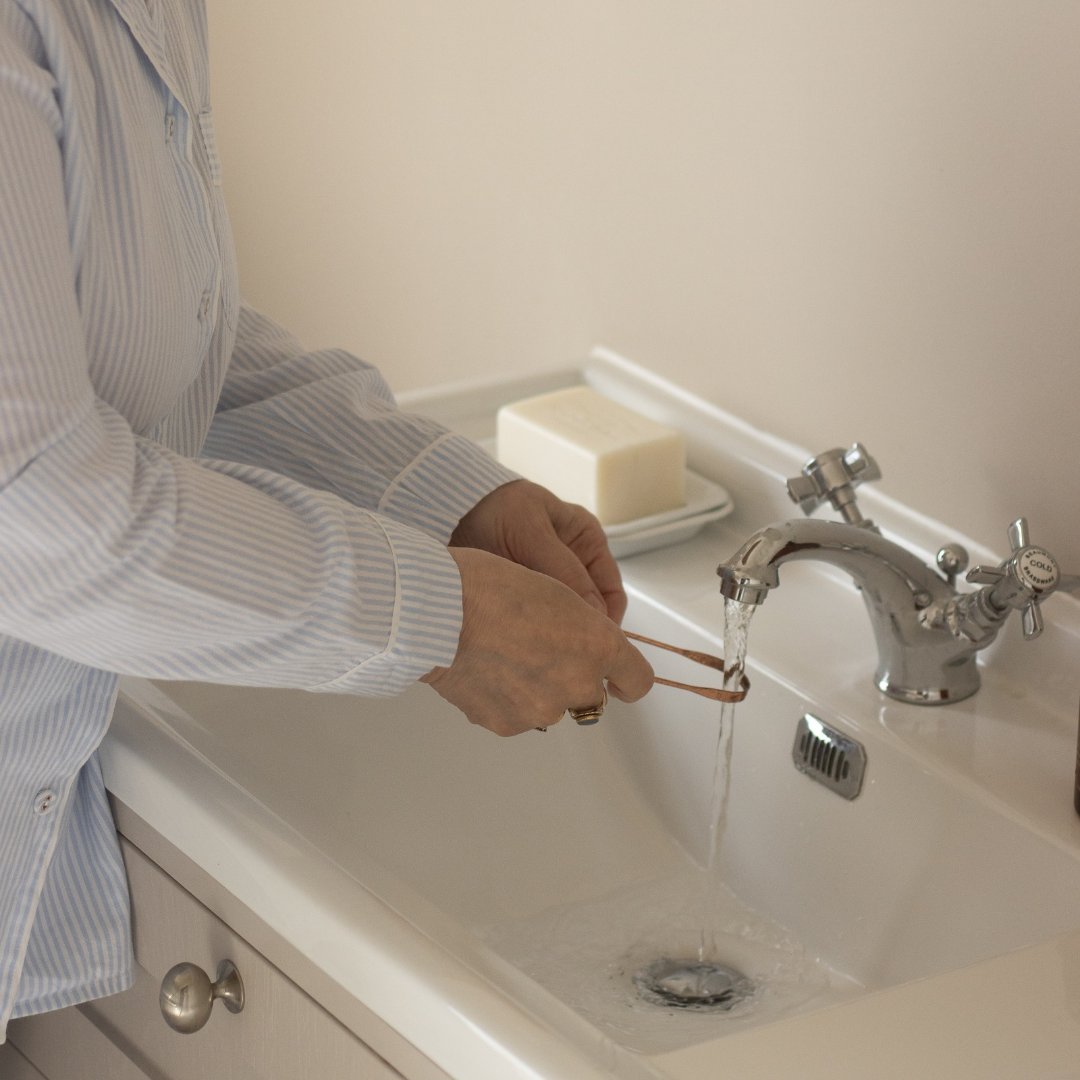
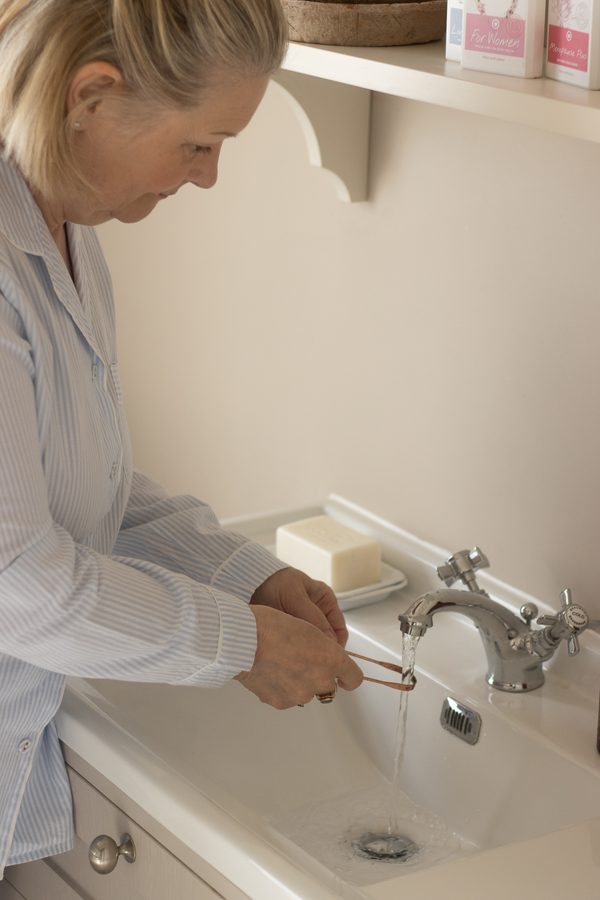
I use a copper tongue scraper every day as part of my oral health routine. It’s a simple habit that takes very little time, yet it can help remove the coating that builds up on the surface of your tongue.
I’ve also made a short reel to show you how I use mine.
But tongue scraping is about more than just keeping your tongue clean. It’s also a useful starting point for a wider conversation about oral health, digestion and the relationship between the bacteria in our mouths and the rest of our bodies.
Let’s take a closer look.
Why clean your tongue?
Take a look at your tongue. Its surface isn’t smooth; it has tiny bumps and crevices where bacteria, food debris and dead cells can accumulate, forming a coating.
This is completely normal, but when that coating builds up, it can contribute to bad breath.
Gently scraping your tongue helps remove some of this material and may improve breath freshness. It’s a simple practice to add to your oral hygiene routine, although it isn’t a substitute for brushing your teeth, cleaning between them or addressing any underlying dental problems.
Why I use a copper tongue scraper
Copper is my personal choice, but you don’t necessarily need a copper scraper to benefit from tongue cleaning. Other materials are available, and the most important things are that your scraper is comfortable to use, easy to clean and used gently.
My daily routine is straightforward:
- I stick out my tongue and position the scraper as far back as feels comfortable.
- I gently draw it forwards towards the tip of my tongue.
- I rinse the scraper and repeat a few times as needed.
- Afterwards, I clean the scraper according to the manufacturer’s instructions and allow it to dry.
There’s no need to press hard or try to remove every trace of coating. Tongue scraping shouldn’t hurt or make your tongue bleed.
If your tongue becomes sore or irritated, stop scraping and seek advice if the problem persists.


What if you suffer from bad breath?
Bad breath, also known as halitosis, can have several causes.
Bacteria in the mouth break down food debris and other organic material, releasing odorous compounds. The tongue’s surface can provide an environment for these bacteria, which is one reason tongue cleaning may help.
However, persistent, bad breath isn’t always a matter of having a coated tongue.
Gum disease, tooth decay, dry mouth and certain foods or medications can all contribute. Digestive conditions and other medical issues may also be involved in some cases, although most persistent, bad breath originates in the mouth.
If bad breath continues despite good oral hygiene, it’s worth speaking to your dentist to investigate the cause rather than simply trying to mask the smell.
What does your mouth have to do with your gut?
Quite a lot, actually.
Your mouth is the entry point to your digestive system. Every day, you swallow food, drink and saliva, along with microorganisms that naturally live in your mouth.
Most of the time, these microorganisms are part of a complex ecosystem that exists without causing harm. The mouth is home to hundreds of bacterial species, and many play a normal role in our oral environment.
But researchers are increasingly interested in what happens when the balance of these microbial communities changes, and whether bacteria from the mouth can influence health elsewhere in the body.
This is where the relationship between oral health and gut health becomes particularly interesting.
The connection between oral bacteria and bowel health
Last year, I shared some research following a talk by Dr James Goolnik, a dentist who discussed the links between oral health and the wider body.
You may have come across the terms biological dentistry or holistic dentistry. These approaches emphasise the relationship between oral health and overall wellbeing, alongside considerations such as prevention and dental materials. Preventive care and attention to a patient’s overall health are also important parts of conventional dentistry.
One topic from the talk particularly caught my attention: a bacterium called Fusobacterium nucleatum.
This bacterium can live in the mouth and is associated with dental plaque and gum disease. Researchers have also identified it in some colorectal (bowel) cancer tissues, prompting questions about whether certain strains might play a role in the development or progression of the disease.
A study published in Nature in 2024 brought further attention to this connection.
Researchers identified a particular subgroup of F. nucleatum, known as Fna C2, that was more prevalent in colorectal cancer samples. Laboratory and animal experiments suggested that this subgroup had characteristics that could help it survive in the digestive tract and potentially contribute to tumour growth.
It’s an intriguing finding, but it’s important to put it into perspective.
Finding a bacterium in a tumour doesn’t, by itself, prove that it caused the cancer. Research is still exploring how these bacteria might behave, how they reach the bowel and what role they may play in disease. These findings don’t mean that people with F. nucleatum in their mouths will develop bowel cancer, nor do they establish that tongue scraping can prevent it.
Nevertheless, the research highlights an important area of investigation: the relationship between the microorganisms in our mouths and our health beyond the mouth.
For me, it’s another reminder that oral health is an important part of looking after our overall wellbeing.
Why do some people develop an infection after a tooth extraction?
Another aspect of oral health that I find interesting is how differently people can recover after having a tooth removed.
Some heal without any problems, while others experience complications, including infection, and may need further treatment.
Why does this happen?
Healing after an extraction depends on several factors, including the complexity of the procedure, the condition of the surrounding tissues, existing health conditions, smoking and how well the extraction site is cared for afterwards.
Oral hygiene can play a part, too. Keeping the mouth clean helps limit the build-up of plaque and supports a healthy oral environment. However, an infection isn’t necessarily a sign that someone has poor oral hygiene.
Following your dentist’s aftercare instructions is particularly important. Depending on the procedure and how recently it took place, these may include avoiding vigorous rinsing, protecting the blood clot in the socket and keeping the surrounding teeth clean.
If you develop increasing pain or swelling, a fever, or other signs of infection after an extraction, contact your dentist promptly. Significant swelling that affects breathing or swallowing requires emergency medical attention.
It’s worth remembering that different people heal differently, and good oral hygiene is one part of recovery rather than a guarantee against complications.
A simple habit, with a wider perspective
I enjoy tongue scraping because it’s quick, straightforward and easy to incorporate into my daily routine.
What interests me most is the bigger picture. Our mouths are home to a complex community of microorganisms, and researchers are continuing to investigate how oral health connects with the rest of the body.
We shouldn’t jump to conclusions about what this research means for individual health, but it’s a fascinating reminder that our bodies don’t operate in isolation.
Looking after your mouth is a small, quick investment in your health, and one I’m happy to make.
Have you tried tongue scraping, or is it something you’ve never really thought about? I’d love to hear about your experience.

