


I’ve recently returned from two weeks at the Bleib Berg F.X. Mayr Health Retreat in Austria, where I immersed myself in a full body reset. It involved an array of tests, treatments, and a very structured way of eating designed to restore gut health. Whilst I don’t have any digestive or gut health issues, for me, I am always focused on prevention and of course, learning from the Mayr doctors so that I can pass all their advice on to you. 😊
While the experience was powerful, I want to be clear: you don’t need to go to such lengths to improve your digestion and overall wellbeing. Over the coming weeks, I’ll be sharing simple, practical takeaways from the Mayr approach that you can incorporate into daily life.
At the heart of the Mayr method are three guiding principles for health: eat well, digest well, eliminate well. These aren’t just ideas; they reflect a deeply connected process that goes back millennia. When you truly eat well, the body is naturally better equipped to digest efficiently and eliminate properly.
So, let’s start there.
Eat well, and the rest begins to fall into place
In this short video, I break this down into three simple ideas:
- What you eat
Focus on fresh, organic, minimally processed foods. The Mayr philosophy avoids ultra-processed foods entirely – those filled with additives and chemicals that can disrupt gut health and contribute to disease. - How you eat
This was one of the biggest lessons for me. I have known it for years, but each time I visit a Mayr clinic, I am reminded of how every mouthful should be chewed until almost liquid. It sounds extreme, but digestion starts in the mouth. Saliva contains enzymes that begin breaking down food before it even reaches the stomach. Slow eating transforms how your body handles food. - When you eat
Timing matters more than we think. At the Mayr clinics, meals are spaced about four hours apart, with the smallest meal in the evening. Dinner is intentionally light – often just a simple soup – to give the digestive system a rest overnight. Another key principle: avoid raw foods later in the day, as they’re harder to digest.
What I actually ate (and why)
The food at the clinic is simple, repetitive, and very intentional. Everything is organic, locally sourced, and served in small portions. Portion control is a fundamental part of the Mayr approach – it’s not about restriction, but about giving the digestive system the space it needs to rest and function properly. Being back at the clinic was a real eye-opener for me; it reminded me just how much I tend to eat in everyday life, and how easily frequent snacking can become a habit rather than a necessity. Eating less, more slowly, and more mindfully brought a renewed awareness of true hunger and satiety.
A typical day looked like this:
- Breakfast: a boiled egg, sheep’s curd cheese, and a portion of ‘chewing trainer’ bread
- Lunch: fish with vegetables (sometimes with soup and a small dessert)
- Dinner: a light soup with chewing trainer again or sheep’s yoghurt.
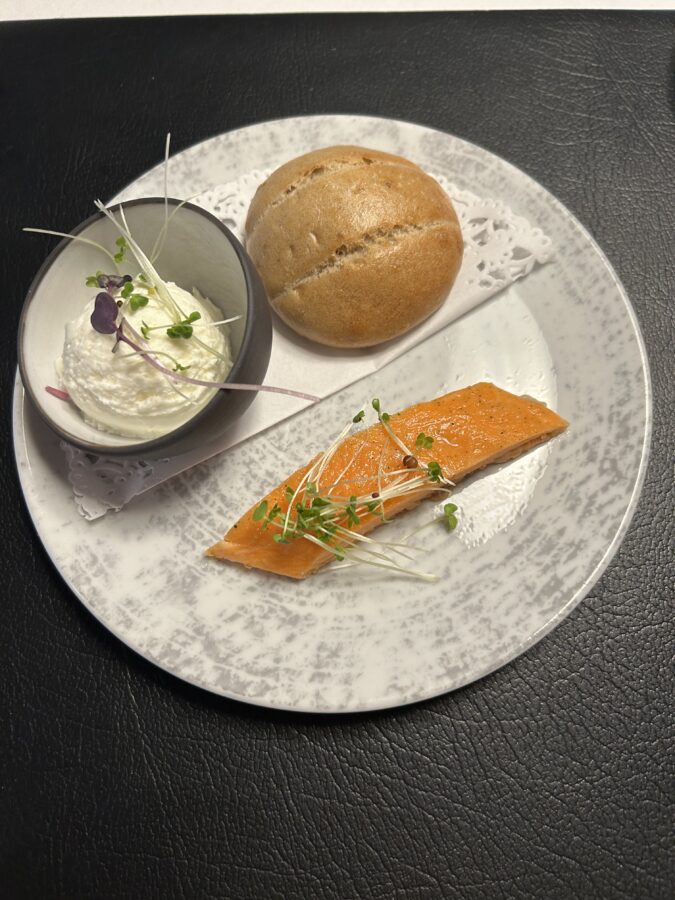

The monotony is deliberate – it reduces digestive strain and allows the gut to rest and repair.
One of the most important elements is the ‘chewing trainer’ bread. It’s made from just three ingredients: spelt flour, water, and salt (or buckwheat for a gluten-free option). It’s intentionally dry and dense, forcing you to chew thoroughly and mix it properly with saliva before swallowing. You simply can’t rush it – and that’s exactly the point.
This small practice alone can completely change how you eat.
Easing into fasting
Fasting is also part of the Mayr approach, but it’s introduced gradually and always in tune with how your body feels.
I chose not to fast immediately. Instead, I followed what’s called a ‘mild derivative diet’ – three meals a day with careful food combining. As the days went on, I naturally began to reduce my intake:
- I started skipping dinner
- Then reduced portion sizes at lunch
- Eventually, I found myself fasting from around 1pm through to 8am the next day and never felt hungry. The alkalising powder I took daily helps to reduce appetite by neutralising stomach acid. When acid is in the stomach, a message is sent to the brain to demand food so by neutralising stomach acid, this suppresses appetite which makes fasting more comfortable.
What’s important here is that this wasn’t forced. It felt like a natural progression. And that’s a key takeaway – your body will guide you if you pay attention.
The bigger picture
What struck me most is how simple this all is at its core.
Eat real food.
Eat slowly.
Eat less, especially in the evening.
Next time, I’ll talk more about the tests and treatments I had during my retreat.
For now, when you next eat, remember: slow down, eat less, chew more and notice the difference.

